Поиск по этому блогу

пятница, 12 декабря 2014 г.

Examination topics for postgraduates students of physical department

1. What science is? Physics as a science
2. Outstanding personality in Physics
3. The Law of Universal Graviation.
4. Secrets of Comets.
5. World care.
6. Electricity and magnetism.
7. Isaac Newton.
8. Quantum mechanics.
9. The general theory of Relativity.
10. My study at Dagestan St. University.

пятница, 5 декабря 2014 г.

Home work for the postgraduate students

Before you read 
Discuss these questions with your partner. 
What do you think is the most important 
invention 
A of all time?
В in the last century?

С in the last 20 years?

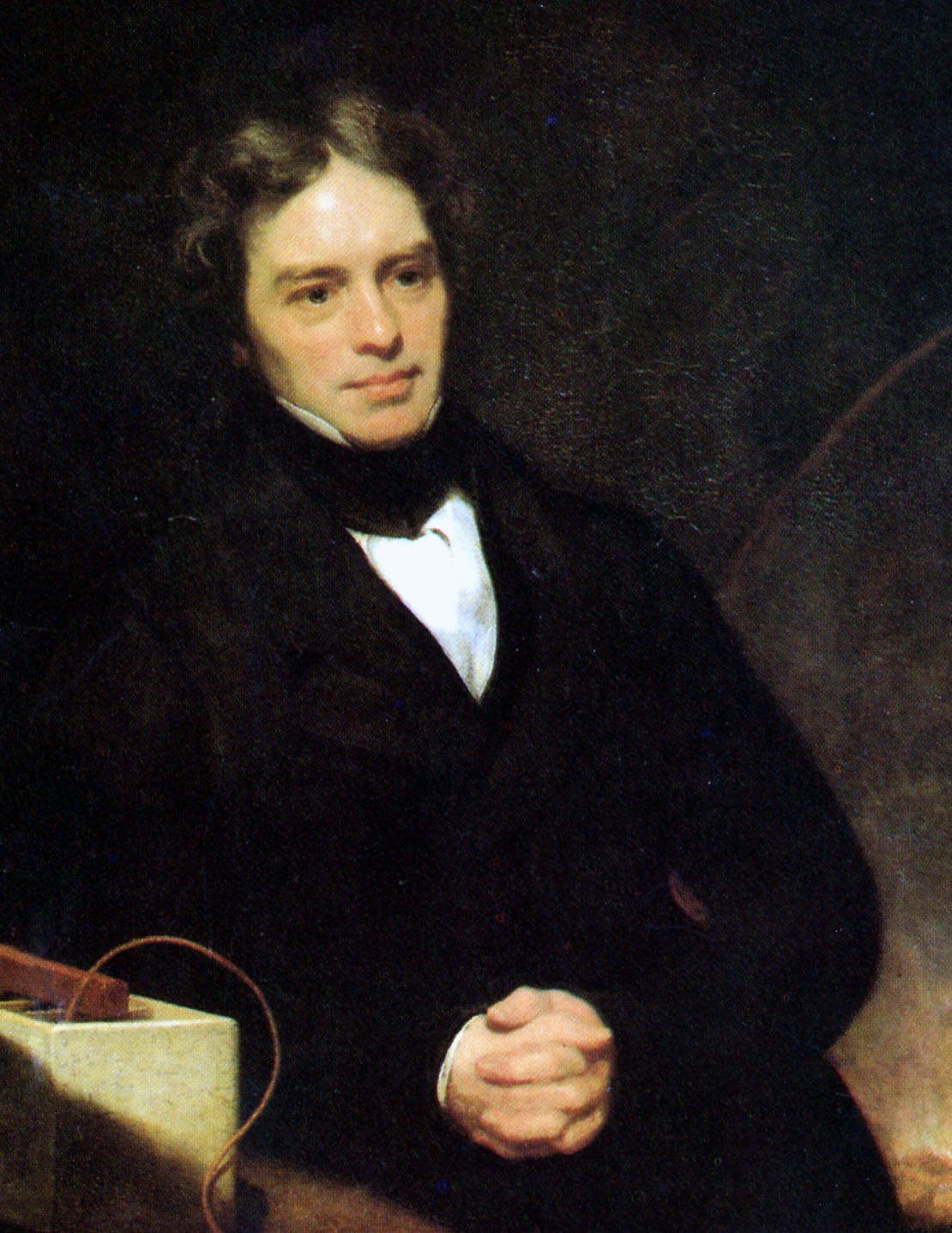
Michael Faraday 

      Faraday (1791-1867) was unusual among famous men in the 19th century. His family did not have a high status in Victorian society. He was born in London to a poor family. He received little more than a primary school education, but educated himself. He did not have the support and encouragement of famous teachers.Instead, he worked making and repairing the covers of books in the daytime and attending public lectures at the Royal Institution in the evenings.
      One series of lectures was given by Humphrey Davy, one of the leading physicists of the time, and Faraday wrote to him, hoping to become accepted into the scientific community. Davy wrote back, recommending that Faraday continue to be a bookbinder. Faraday's chance came soon after that. Davy injured his eyes in an explosion in his laboratory, and offered Faraday a job as his secretary. The years which followed were not entirely happy ones for 63 Macmillan Guide to Science Unit 15
Physics Faraday. He was not considered to be a gentleman, his family were too low born for that. Even when he went with Davy on a tour of Europe, Faraday had to wash Davy's clothes, eat with the servants and ride on the roof of the coach rather than inside it. For a time, Faraday thought about giving up science altogether.
       Now, however, Faraday had time to carry out experiments at the Royal Institution of Great Britain, though he was still Davy's assistant. Davy tried and failed to make an electric motor and discussed his failure with his assistant. Faraday set to work, and produced what he called a homopolar motor. It was simply a wire, rotating around a magnet when an electric current from a battery was applied. It seems though that somehow Faraday upset Davy, who had recently been honoured by Queen Victoria. The following years saw Faraday working on Davy's experiments with glass. Whatever Faraday did, Davy seemed determined to prevent him from succeeding with electricity.
       In 1829 Davy died, and soon after Faraday began the series of experiments that would make him one of the most important scientists of all time. He managed to build a device which moved a magnet through a loop of wire. This motion of the magnet through the wire created an electric current. He demonstrated that a changing magnetic field produces an electrical field. He was helped by James Clerk Maxwell to state the process mathematically (maths had always been Faraday's weakness), and this is now known as Faraday's Law of Induction. It is one of the foundations of electromagnetism and of modern technology. Later, Faraday built the first dynamo, a way of generating electricity. What Faraday did was to discover a way both of making electricity and of making use of it. Without his discoveries we would not be able to enjoy the modern lifestyle that we have now.
         Although now famous, Faraday remained modest. He was offered honours by the Queen, but refused to accept them. Nearly 150 years after his death, however, he was honoured in another way. Between 1991 and 2001 his face appeared on a Bank of England Ј20 note.


Read the text and answer the questions 
in your own words. 

1 How did Faraday get his education? 
2 What was Faraday's second job? 
3 Why did Faraday experiment with glass? 
4 How did Maxwell assist Faraday? 
5 How were Faraday's achievements 
recognised? 


понедельник, 1 декабря 2014 г.

Water from Moondust?

Read and translate this article.
"No magic (2) --" says Ed Ethridge of NASA's Marshall Space Flight Center (3) "-- just microwaves (4). We're showing how microwaves can extract water from moondust by heating it from the inside out (5)."

The recent discovery (6) of water on the Moon's surface has inspired (7) researchers like Ethridge to rev up (8) the development of technologies to capture (9) it. Some of them believe the small amounts of frozen water mixed in lunar (10) topsoil (11) are just the tip (12) of the iceberg. If so, Ethridge has figured out (13) a way to retrieve (14) it.

"We believe we can use microwave heating to cause the water ice in a lunar permafrost (15) layer to sublimate (16) – that is, turn into water vapor (17). The water vapor can be collected and then condensed (18) into liquid water."

(1) moondust, n – лунная пыль. Кстати, в американском английском (автор текста из США) часто позволяется слитное написание определяющего и основного существительных, например: moondust = moon dust; sun ray = sunray. Такое слитное написание присуще выражениям, которые обозначают некий предмет или феномен единственный в своем роде и воспринимаемый, как что-то целое.
(2) magic, n – волшебство, магия. e.g. by magic – по волшебству.
(3) Отметьте место сказуемого и подлежащего после прямой речи. Обычно в таком положении сказуемое (say) выходит на первое место.
(4) microwave, n - микроволновое излучение. Не путаем с микроволновой печкой, которая в быту также называется просто microwave. e.g. Did you put the cake in the microwave?
(5) from the inside out – изнутри, со внутренней стороны.
(6) discovery, n – открытие; находка.
(7) inspire, v – вдохновлять. e.g. His works were inspired by the painters from the XIX century.
(8) rev up – увеличивать, наращивать. У данного глагола интересное происхождение. Свое начало он берет от слова revolution – оборот (например, оборот двигателя). В разговорном английском revolution сократилось до rev и стало глаголом «работать на повышенных оборотах». А дальше по аналогии с работой двигателя глагол получил значение «наращивать» и усилительный предлог «up».
(9) capture, v – захватывать (как буквально, так и в переносном значении). e.g. He captured the fish with his hand. – Он поймал рыбку рукой.
(10) lunar, adj – лунный.
(11) topsoil, n – верхний слой почвы. Так как на Луне нет почвы, в нашем контексте это будет верхний слой лунной пыли.
(12) tip, n – верхушка. Не путайте с другим значением слова tip - «чаевые». e.g. He got 100 dollars in tips last week.
(13) to figure out – разобраться, понять. e.g. I couldn’t figure him out yet. – Я еще не понял, что он за человек.
(14) retrieve, v – извлекать.
(15) permafrost, n - вечная мерзлота.
(16) sublimate – возгонять, превращать. Автор использует химический термин и сразу же описывает его значение «turn into water».
(17) water vapor – пар воды.
(18) condense, v – конденсировать, уменьшать в объеме.

пятница, 28 ноября 2014 г.

Unit 12 For the postgraduate students

Before you read 
Discuss these questions with your partner. 

What household appliances use electricity? 
Where does electricity come from? 
What does a magnet do? 


Electricity and magnetism 

         Electromagnetism is everywhere. It is a field that exists throughout space. When particles are electrically charged, the electromagnetic field exerts a force on them. These particles then move and exert a force on the electromagnetic field. By generating these fields when and where we want them and by controlling these forces we have electricity. This gives us the power we use in the modern world. All our TVs, phones, street lights and cars depend on electromagnetism. So what is electromagnetism? Actually, it is two things, but they are so closely connected that it is convenient for us to think of them as one, as two sides of the same coin. There are two types of field: electric and magnetic. Electrically-charged particles result in an electric field, static electricity. When there is a conductor, a material which will allow electric field to pass through it, then we can create an electric current. In our homes, the conductors are the wires that run through our house to the Macmillan Guide to Science Unit II 61 light bulbs or the TV. A magnetic field results from the motion of an electric current and is used to generate the electricity we use.
       In the 19th century, James Clerk Maxwell, the Scottish physicist, produced the equations that proved the two forces acted as one. One effect of this was for physicists all over the world to hurry back to their libraries and laboratories to rewrite the theories on the motion of objects. Maxwell's equations showed that what physicists had believed for centuries was in fact not correct. It was not until Einstein, in the 20th century, that the theory of motion was put right - at least for now. 
        How do we know the two things are one? Well, sailors had known for centuries that lightning affected the magnetic compasses on their ships. No one, however, made the connection between lightning and electricity until Benjamin Franklin, the American politician and scientist, flew a kite in a thunderstorm to attract the lightning. In other parts of the world, physicists were experimenting with magnets and electricity. Most passed a current across a magnetic needle and watched it move. The Frenchman, Andre Marie Ampere eventually applied mathematics to electromagnetism. It is from his work that we have our modern understanding of electromagnetism.
           One piece of the jigsaw remained. No one had discovered a way of generating electricity. True, there were batteries, Alessandro Yolta invented the Voltaic pile in 1800, but it was of limited use. Certainly no battery could provide enough electrical power to operate a machine. For that the world would have to wait for Michael Faraday to find a way of creating an electrical current, when and where it was needed. 

Comprehension 
Read the text and choose the 
correct answer. 
1 We can make electricity by 
A exerting a force. 
В creating electromagnetic fields. 
С charging particles. 
D moving particles. 

2 Electrical and magnetic fields 
A are opposites. 
В are two very different things. 
С are very closely related. 
D need a conductor. 

3 Maxwell's equations 
A corrected the theory of motion. 
В caused scientists to rethink. 
С rewrote older theories. 
D have completely ensured the theory of 
motion now. 

4 Our modern knowledge of electromagnetism 
comes from 
A Ampere. 
В lightning. 
С Benjamin Franklin. 
D experiments with magnets. 

5 The electric battery 
A could operate a machine. 
В could create an electric current. 
С was invented by Faraday. 
D was invented in 1800. 
Before you listen 

среда, 26 ноября 2014 г.

суббота, 22 ноября 2014 г.

Modal verbs

The modal verbs include can, must, may, might, will, would, should. They are used with other verbs to express ability, obligation, possibility, and so on. Below is a list showing the most useful modals and their most common meanings:
  
ModalMeaningExample
canto express abilitycan speak a little Russian.
canto request permissionCan I open the window?
mayto express possibilitymay be home late.
mayto request permissionMay I sit down, please?
mustto express obligationmust go now.
mustto express strong beliefShe must be over 90 years old.
shouldto give adviceYou should stop smoking.
wouldto request or offerWould you like a cup of tea?
wouldin if-sentencesIf I were you, I would say sorry.

Modal verbs are unlike other verbs. They do not change their form (spelling) and they have no infinitive or participle (past/present). The modals must and can need substitute verbs to express obligation or ability in the different tenses. Here are some examples:

Past simpleSorry I'm late. I had to finish my math test.
Present perfectShe's had to return to Korea at short notice.
FutureYou'll have to work hard if you want to pass the exams.
InfinitiveI don't want to have to go.
Past simpleI couldn't/wasn't able to walk until I was 3 years old.
Present perfectI haven't been able to solve this problem. Can you help?
FutureI'm not sure if I will be able to come to your party.
InfinitiveI would love to be able to play the piano.

Modals are auxiliary verbs. They do not need an additional auxiliary in negatives or questions. For example: Must I come? (Do I must come?), or: He shouldn't smoke (He doesn't should smoke).


Important: The explanations and examples on this page are just an introduction to this extensive and complex area of English grammar. Students of English who want to learn more should consult a good reference work, such as Swan's Practical English Usage.

пятница, 7 ноября 2014 г.

понедельник, 27 октября 2014 г.

Home work for the first and second year students

 ex 1 Read the opinions below. Decide which of them you support and explain why.

Physics never makes sense to me.
I’ve always thought that all those formulas have nothing to do with real life and we can easily do without them. There’s no point in wasting time on laws of gravitation, magnetism and electrical induction. Physics is not a science for everyone. It’s good for a boring know-it-all which I’m not. I value more down-to-earth things and I’m not ready to spend hours over schemes and calculations, which are beyond my understanding anyway.

Physics is the science that has altered the world.
It’s simply not true that physics is a science only for the select. I think everyone would be able to understand it if only they stopped considering it so scary. Physics is the most natural science which reveals itself every moment in our everyday life. We deal with it when we switch on the light in the evening, when we ride a bicycle and when we kick a ball on the football pitch. Why do some people consider it so sophisticated and impractical?


ex 2 Read the information about one of the most famous scientists in physics. Guess the name and fill it in the last line gap of the text.

He was born in 1642 and died in 1727, which is almost three hundred years ago, but his name is still familiar to everyone who has ever been to school.
He is well-known for the «apple story». Nobody knows for sure but it’s widely believed that the story describes how gravitational force was discovered and also identified as the force which acts on every object on the Earth.
This person is often called the «father» of Physics, but like most talented people, he established himself in other sciences as well. Along with being a great physicist, he was also a distinguished mathematician and chemist. He studied history and chronology, and made a profound impact on optics, astronomy and philosophy. Being a university Professor and a Member of Parliament, he led quite an active and intense life. In 1705 he was awarded with the title of the «Knight» and so added «Sir» to his name. However, nobody inherited his title as he never got married and never had a family.
He was buried in Westminster Abbey. People who see his tomb there can also see Alexander Pope’s words caved on the tomb which say: Nature and Nature’s laws lay hid in night: God said, «Let _______ be!» and all was light.

пятница, 24 октября 2014 г.

Isaac Newton

Additional information fot the student.


Isaac Newton
Newton, one of the greatest scientists of all times was born in 1642 in the little village in Lincolnshire, England. His father was a farmer and died before Newton was born. His mother was a clever woman whom he always loved.
After the school, Newton studied mathematics at Cambridge university and received his degree in 1665. Then the university was closed because of the danger of plague and Newton went home for eighteen months. It was most important period in his life when he made his three great discoveries — the discoveries of the differential calculuses, of the nature of white light, and of the law of gravitation.

These discoveries are still important for the modern science. Newton had always been interested in the problems of light. Many people saw colours of a rainbow but only Newton showed, by his experiments, that white light consists of these colours.
It is interesting how he discovered the law gravitation. Once, as he sat at the garden, his attention was drawn by the fall of an apple. Many people saw such an usual thing before. But it was Newton who asked himself a question: «Why does that apple fall perpendicularly to the ground? Why doesn’t it go sidewards or upwards? » The answer to this question was the theory of gravitation, discovered by Newton.
Newton died at the age of 84, and was buried in Westminster Abbey, where his monument stands today.
Answer the questions:
1. When and where was Newton born?
2. Where did he study?
3. What three major discoveries did Newton make?
4. When did Newton make these discoveries?
5. How did the idea which led to the discovery of the law of gravitation first come to him?
6. When did Newton die and where is he buried?

четверг, 16 октября 2014 г.

Family Members

     For the first year students
                

Immediate Family

When you have children, you are a parent.
If you are a male parent, you are a father.
If you are female parent, you are a mother.
If one of your children is a boy, he is your son.
If one of your children is a girl, she is your daughter.
When a couple gets married, the man is the husband, and the woman is his wife.
brother and sister both have the same parents.
One collective word to describe brothers and sisters is siblings. However this word is normally only used in written English, not orally.

Relatives and Extended Family

grandparents: the parents of your parents
grandfather: the father of your father/mother
grandmother: the mother of your father/mother
grandchildren: the children of your children
grandson: the son of one of your children
granddaughter:the daughter of one of your children
great grandfather: the father of your grandfather/grandmother
great grandmother: the mother of your grandfather/grandmother
uncle: the brother (or brother-in-law) of your mother/father
aunt: the sister (or sister-in-law)of your mother/father
cousin: the child of your aunt/uncle
nephew: the male child of your brother/sister
niece: the female child of your brother/sister

The In-Laws

The in-laws are the members of the family of your spouse (the person you are married to) or via a marriage in your family:
father-in-law: the father of your spouse
mother-in-law: the mother of your spouse
son-in-law: the husband of your daughter
daughter-in-law: the wife of your son
brother-in-law: the husband of your sister
sister-in-law: the wife of your brother
Note: To refer to more than one brother-in-law or sister-in-law etc. we has an S to the brother/sister part.
e.g. My brothers-in-law are fun. My sisters-in-laws are crazy.

The Family Mix

Nowadays in many countries a person can get married more than once. These are the terms used to describe the "new" members of the family when someone gets remarried.
"Step-" means that you are related as a result of one parent marrying again

stepfather: the (new) husband of your mother but not your biological father
stepmother: the (new) wife of your father but not your biological mother
stepson: the son of your (new) husband / wife (he is not your biological son)
stepdaughter: the daughter of your (new) husband / wife (she is not your biological daughter)
stepsister: the daughter of your stepmother or stepfather
stepbrother: the son of your stepmother or stepfather
Sometimes one of your parents gets married again and they have more children. There
half-brother: the brother you have only one parent in common with .
half-sister: the sister you only have one parent in common with.
Even if your parent didn't get married (and had the child outside of marriage), they are still your half-brother or half-sister.
However, note that it is common to still call your half-brother or half-sister just your brother or sister (without adding the half- part).

воскресенье, 28 сентября 2014 г.

Here we can find interesting information about filld of physics

 What are the Fields of Physics?
Physics is a diverse area of study and in order to make sense of it scientists have been forced to focus their attention on one or two smaller areas of the discipline. This allows them to become experts in that narrow field, without getting bogged down in the sheer volume of knowledge that exists regarding the natural world.
Below is a list - by no comprehensive - of different disciplines of physics. The list will be updated with new additions and definitions as appropriate.
  • Acoustics - the study of sound & sound waves
  • Astronomy - the study of space
  • Astrophysics - the study of the physical properties of objects in space
  • Atomic Physics - the study of atoms, specifically the electron properties of the atom
  • Biophysics - the study of physics in living systems
  • Chaos - the study of systems with strong sensitivity to initial conditions, so a slight change at the beginning quickly become major changes in the system
  • Chemical Physics - the study of physics in chemical systems
  • Computational Physics - the application of numerical methods to solve physical problems for which a quantitative theory already exists
  • Cosmology - the study of the universe as a whole, including its origins and evolution
  • Cryophysics / Cryogenics / Low Temperature Physics - the study of physical properties in low temperature situations, far below the freezing point of water
  • Crystallography - the study of crystals and crystalline structures
  • Electromagnetism - the study of electrical and magnetic fields, which are two aspects of the same phenomenon
  • Electronics - the study of the flow of electrons, generally in a circuit
  • Fluid Dynamics / Fluid Mechanics - the study of the physical properties of "fluids," specifically defined in this case to be liquids and gases
  • Geophysics - the study of the physical properties of the Earth
  • High Energy Physics - the study of physics in extremely high energy systems, generally within particle physics
  • High Pressure Physics - the study of physics in extremely high pressure systems, generally related to fluid dynamics
  • It should become obvious that there is some overlap. For example, the difference between astronomy, astrophysics, and cosmology can be virtually meaningless at times ... to everyone, that is, except the astronomers, astrophysicists, and cosmologists, who can take the distinctions very seriously.