Поиск по этому блогу

среда, 30 декабря 2015 г.

Ernest Rutherford

Ernest Rutherford

Ernest Rutherford is a prominent figure in the field of nuclear physics. He is known for his discoveries of chemical relations between radioactive substances. Rutherford is known for his scattering of atom which is popularly known as Rutherford model which he achieved through his brilliant Rutherford scattering and gold foil experiment. Rutherford attained great heights while researching on radioactivity and discovering and coining the terms alpha, gamma and beta which are different types of radiation. Rutherford received his knighthood, Order of Merit and was made the Baron Rutherford of Nelson, of Cambridge in the County of Cambridge for his outstanding atomic and nuclear findings. Such was the brilliance of Rutherford that most of the researching students working under him achieved great heights and were awarded Nobel Prizes. Rutherford’s experiments were regarded as the finest and most controlled ones for which he will always be remembered as one of the greatest scientists ever after Sir Isaac Newton. Rutherford’s tomb lies next to Newton’s which says how much he is respected and how greatly he is remembered.
Read more here

понедельник, 14 декабря 2015 г.

From English Grammar Today


We use the uncountable noun news to mean ‘information or reports about recent events’. It takes a singular verb:
The news is good about Mary. The doctors are very happy about her progress.
Not: The news are good about Mary.
Do you have any news of your sister? How is she these days?
I’ve got some news for you – I’m getting married!
Not: I’ve got a news for you …
If we want to talk about news as an individual thing, we can use bit of, piece of or item of (more formal):
I heard a couple of interesting pieces of news the other day about the company’s plans for expansion.
An item of news caught her eye in the newspaper. It was about a child who was missing.
We say the news when we refer to the television or radio programme that gives reports of recent events:
I always watch the news on CNN before I go to bed.

четверг, 12 ноября 2015 г.

8 Common Grammar Mistakes in English

Test your understanding of this English lesson
Test your understanding of the English lesson by answering these questions. You will get the answers and your score at the end of the quiz. HERE

среда, 4 ноября 2015 г.

Much and many

This video is for the first-year students.We start learning Unit "My comfortable house" so we have to know some grammar material. This video is about differences between using of the words "much" and "many".The words to understand the video properly: countable - исчисляемое,uncountable - неисчисляемое.


среда, 9 сентября 2015 г.

Present Simple

Here there is a video about how to form Pereset Simple. Sorry, it is not of a good quality but nevertheless I ask you to watch it and to do two exercises.
http://www.youtube.com/watch?feature=player_embedded&v=sc7PI0T7oL4

The video below is about three common cases when we are to use Present Simple. Do exercises.

суббота, 13 июня 2015 г.

111 mistakes in English spelling


Известно, что английское правописание отличается особой сложностью. Написание многих слов нужно просто запомнить наизусть.

Стелла Коттрел приводит следующие английские слова, с правописании которых англичане чаще всего допускают ошибки. Думаю, что этот список можно использовать для самопроверки.

Приведенные английские слова мы используем достаточно часто в самых разных областях жизни.

A - accessible, accessory, accommodation, across, acquaintance, acquiesce, acquire, address, aggressive, all right, amateur, analogy, analyse (Can you analyse this data?), analysis (Make an analysis of the facts), appendices, appropriate, argument.
B - belief (my belief), believe (I believe), beneficial, benefited, business.
C - catalogue, category, changeable, commitment, committed, committee, conscientious, conscious, criticism.
D - deferred, definite, definitely, discriminatory.
E - equipped, embarrass, exaggerate, excellent, existence.
F - February, focused, focusing, foreign, forty, fourten, fulfil, fulfilled.
G - gauge, government, grateful, guarantee.
H - height, honorary, humorous.
I - immediately, immovable, inconsistent, independent, irresponsible.
L - laboratory, liaise, lose (I don’t want to lose my bag), loose (The knot is too loose).
M - maintenance, manageable, manoeuvre, miscellaneous.
N - naive, necessary, negligible, noticeable.
O - occasionally, occur, occurred, omission, omitted.
P - parallel, privileged, probably, procedure, professional, psychological.
R - receipt, receive, recommend, referred, relevant, repetition, reputation, resistant.
S - scene, secretary, separate, similar, skilful, skilfully, social, successfully, syllabus, synthesis (It was a good synthesis), synthesise (He synthesised the main point).
T - technicality, temporary, theoretical, through.
U - unnecessary, until, usually.
V - veterinary.

среда, 11 марта 2015 г.

Misspelled Words


Having difficulty spelling certain words? Spelling book is the place for you to master your knowledge of English spelling, and never repeat those mistakes again!


You can choose a word wich spelling you want to remember, look through its definition and then try to make up a sentence with it. Using Ginger you will find out if your spelling or understanding of the word is right.

вторник, 17 февраля 2015 г.

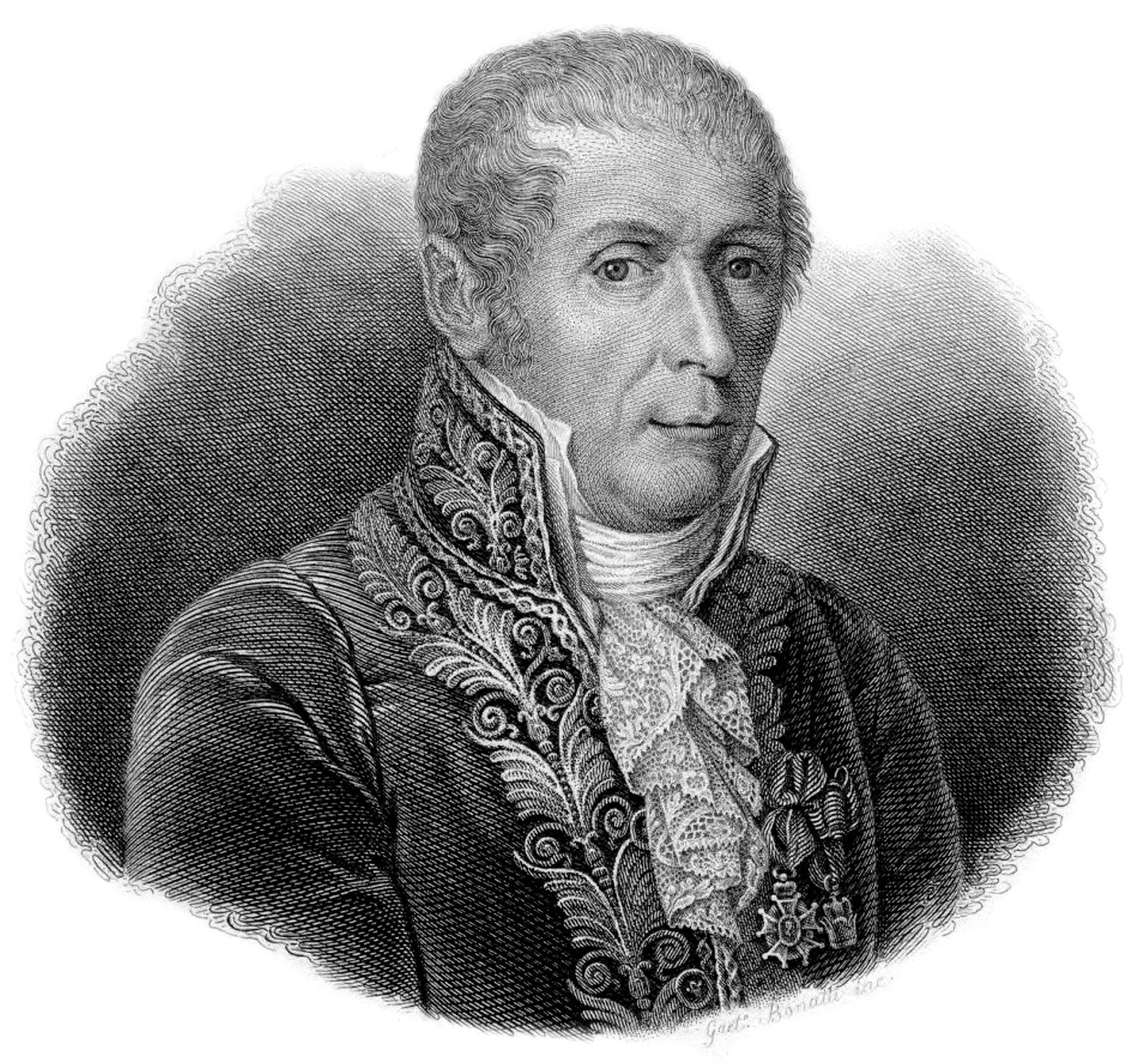
270 лет со дня рождения Алессандро Вольты


Alessandro Volta was a physicist, chemist and a pioneer of electrical science.
This was particularly thrilling given he was the 18th century Italian physicist, chemist and electrical pioneer who invented the first electrical battery.
To my surprise this discovery almost came by accident while Volta and his friend Galvani, an anatomy professor, were dissecting a frog. When the animal’s legs unexpectedly twitched from an electrical discharge, Galvani went on to hypothesize that animals generated their own electricity, a theory that would eventually go on to inspire Mary Shelly’s novel, ‘Frankenstein’. But Volta had his own theory: that the electrical discharge had been caused by two different metals touching the frog’s body.
Experimenting with different metals and solutions, Volta ended up creating the first electric battery: the Voltaic Pile, a stack of alternating metal discs separated by cardboard and cloth soaked with seawater. But what made this battery so remarkable was that it was easy to construct out of common materials and enabled experimenters for the first time to produce steady, predictable flows of electricity. Within just weeks it inspired a wave of discoveries and inventions and ushered in a new age of electrical science.


More information about this famous physicist you can read here